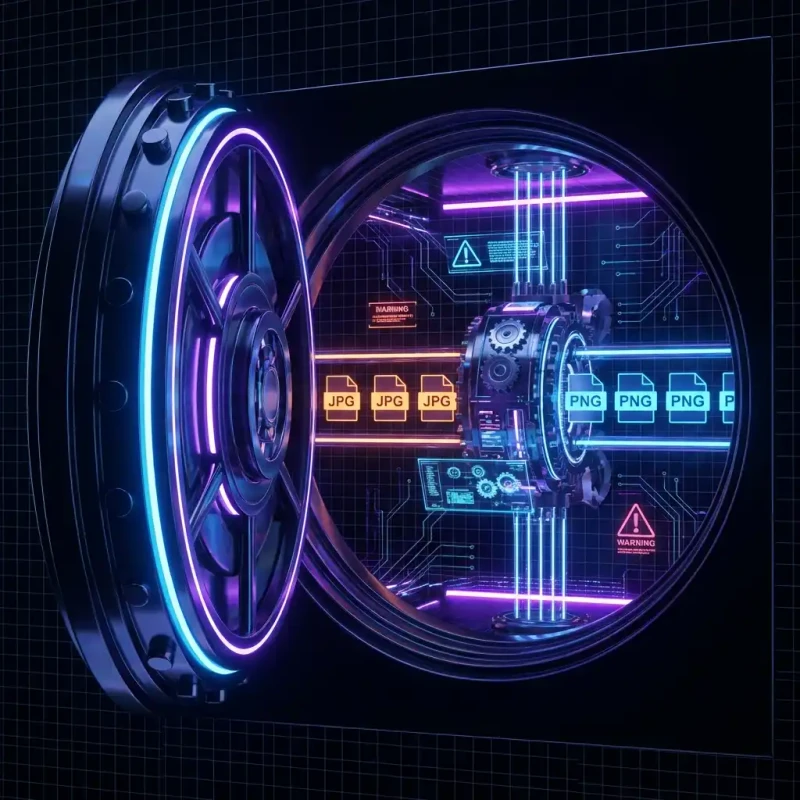

The internet didn't need another file converter; it needed a safer one. Discover the mission behind MojoDocs and how we're decentralizing the web.
In 2026, the phrase "Free Online Tool" has become synonymous with "Data Mining Operation." Every time you upload a PDF to rotate it or a JPG to shrink it, you are feeding a hungry ecosystem of hidden trackers, server-side storage, and potentially insecure cloud buckets. We built MojoDocs because we were tired of choosing between our productivity and our privacy.
The inspiration for MojoDocs wasn't a business plan; it was a realization of technical waste. We noticed that modern web browsers have become so powerful that the "Client-Server" model for simple utility tasks is not only a privacy risk but an engineering inefficiency. Why are we sending a 2MB file across the globe to be processed by someone else's CPU when the CPU in your pocket is idling at 98% capacity?
The Hidden Cost of "Free"
Running a website like IlovePDF or TinyPNG is incredibly expensive. They handle millions of requests, requiring massive server farms, cooling systems, and high-bandwidth connections. To pay for this, they have three options:
- Aggressive Advertising: Selling your attention and filling your screen with ads that slow down your computer.
- Data Monetization: The "Free" tier is a front for data collection. Training AI models on user documents or selling metadata to advertisers.
- Freemium Paywalls: Gating basic features like batch processing behind a $10/month subscription.
MojoDocs is different because our architecture is different. By moving the processing to your browser, our server costs drop to nearly zero. We don't need a supercomputer to compress your images—your computer is the supercomputer. This allows us to offer professional-grade tools for free, without the need to sell your data.
The Ethical Pivot to "Local-First"
We are firm believers in the Local-First software movement. The core idea is that the data belongs to you, and the cloud should be optional, not mandatory. For utility tools, the cloud is almost never necessary.
When you use MojoDocs, you are participating in a decentralized web. You are using your own hardware to solve your own problems. We simply provide the secure code to facilitate it. This architecture creates a "Zero-Trust" environment: you don't have to trust that we won't steal your data, because we have designed a system where we cannot steal it.
Engineering for Impact: WASM as the Great Equalizer
The cornerstone of MojoDocs is WebAssembly (WASM). Five years ago, running a high-quality PDF engine or a video transcoder in a browser was impossible; JavaScript was too slow. But WASM changed everything. It allows us to compile high-performance C++ and Rust code into a format that runs at 90% the speed of native OS applications.
This isn't just a win for privacy; it's a win for the environment. Traditional cloud tools require continuous server operation and cooling. Local-first tools only consume energy when you are actively using them, utilizing the hardware you already own. It is a more sustainable, more ethical way to build the internet.
Comparison: The Economics of Trust
| Feature | Traditional SaaS | MojoDocs Mission |
|---|---|---|
| Monetization | Data/Ads/Subscription | Contribution/Open Mission |
| Server Dependency | Total (Down if Cloud is Down) | Zero (Works Offline) |
| Innovation Focus | Storage/Cloud Scaling | Privacy/Client-Side Speed |
A Response to Big Tech Overreach
We've seen too many instances of "terms of service" updates where companies suddenly claim the right to scan your files for "machine learning research." At MojoDocs, our terms of service are written in our code. If the code doesn't send the file, the policy doesn't even matter. We are building a future where you don't need a lawyer to understand if your files are safe—you just need a basic understanding of how a browser sandbox works.
The Road Ahead: Building the Universal Utility
MojoDocs is just getting started. We are expanding into more complex areas like client-side video editing, secure document signing, and offline-first AI translation. Every new tool we add follows the same core rule: Your files never leave your device.
We want to be the tab you keep pinned. The tool you reach for when security is non-negotiable. The platform that proves "Free" doesn't have to mean "Compromised."
Conclusion: Reclaiming Agency
Every time you choose a local-first tool over a cloud-dependent one, you are voting for a more decentralized and private internet. MojoDocs is here to provide the tools for that vote. We didn't build it to own your data; we built it so that you could keep it.
Developer Note on Infrastructure
Interested in how we keep the lights on without selling your soul? We use a hyper-efficient static hosting model. Since we have no backend processing, our hosting costs are minimal. We prioritize the user experience over the corporate bottom line.