The pendulum is swinging away from centralized cloud computing. Discover how WebAssembly (WASM) is shifting power back to the user's device, enabling infinitely scalable, hyper-secure web applications.
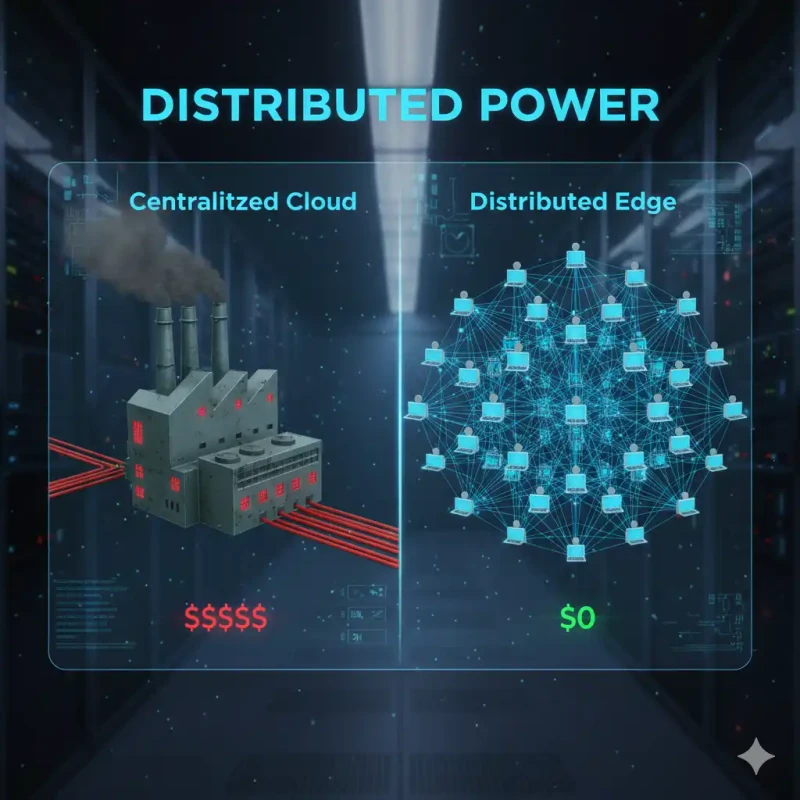
The history of computing is a story of a swinging pendulum. From centralized mainframes to localized personal computers, and back to centralized servers known as "The Cloud." Now, driven by radical advancements in browser technology, the pendulum is swinging back to the local device.
Centralization brought unprecedented convenience, but it came at a tremendous, often unseen cost: the absolute loss of data sovereignty. Every photo you edited and every PDF you merged required transferring your raw data to a third-party server.
In 2026, a new architectural paradigm has taken hold: Local-First Web Development, powered by WebAssembly (WASM). Let's explore why the cloud-only model is failing for utility applications and how platforms like MojoDocs have leveraged this tech to build a massive ecosystem of privacy-first tools.
Chapter 1: The Broken Promise of the Cloud Utility
While the cloud is undeniably the right architecture for social networks and multiplayer games, it is fundamentally the wrong architecture for single-player utility tasks.
If you upload a 250MB PDF to a cloud server to compress it, you waste minutes of network transmission time for a task that requires just 4 seconds of computation. The Cloud Utility model operates on a false premise: that the user's device is too weak to perform the computation itself. In reality, your modern laptop has an 8-core CPU sitting practically asleep on your desk.
Chapter 2: The Magic of WebAssembly (WASM)
The reason developers built cloud utilities was because JavaScript was historically incapable of heavy computation. It was never designed for low-level memory manipulation, image rendering, or video encoding.
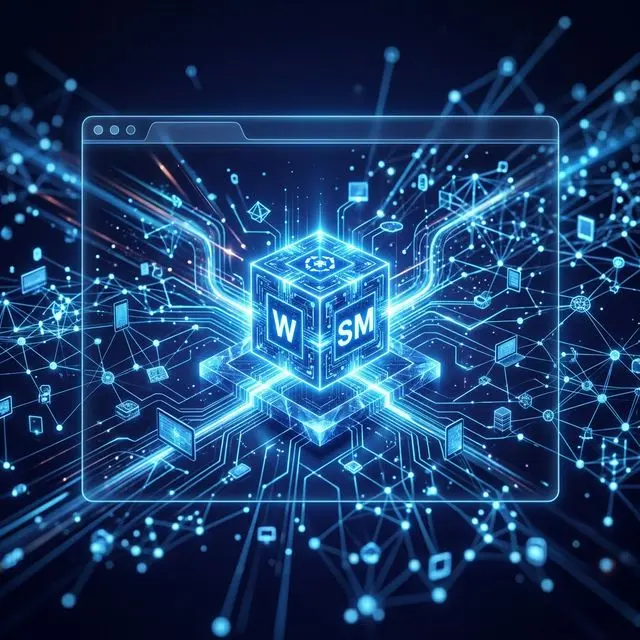
WebAssembly (WASM) changed the rules of physics for the web browser. It is a binary instruction format designed as a portable compilation target for languages like C, C++, and Rust. It maps almost directly to the native machine code of the user's CPU.
Suddenly, developers could compile FFmpeg, ImageMagick, or SQLite to WebAssembly, and run them perfectly inside the browser sandbox. WASM broke the monopoly of the server.
Chapter 3: Defining "Local-First" Architecture
A Local-First Web Application is defined by three core principles:
- The Network is Optional: The app contains all logic required to function fully offline.
- Client-Side Execution: Heavy lifting happens on the local CPU, not an external server.
- Data Sovereignty by Default: User files are stored locally and never transmitted to a backend for processing.
Chapter 4: Case Study: MojoDocs (mojodocs.in)
To see the Local-First paradigm in action at an enterprise scale, we look at MojoDocs. The backend infrastructure consists almost entirely of a Content Delivery Network (CDN) serving raw HTML, JS, and optimized .wasm binary files.
By pushing the compute to the client interface, MojoDocs achieves an economic miracle: Processing scales infinitely at zero marginal cost. If 100,000 users process a file simultaneously, the servers do not crash, because the users are utilizing their own laptops. This economic reality allows MojoDocs to offer 1000+ tools completely free without subscription models.
Chapter 5: Security by Architecture, Not by Policy
Enterprise data security involves signing massive Data Processing Agreements (DPAs) and trusting cloud host security configurations. This is Security by Policy.
Local-First applications utilize Security by Architecture. There is no database storing user files. There is no temporary S3 bucket holding PDFs. You cannot leak data that you do not possess. The file remains entirely within the volatile memory (RAM) of the user's machine.
Conclusion: The Future is Decentralized Utility
The cloud will not disappear for collaborative software. But for personal utility tasks, the cloud was a temporary detour. WebAssembly means the band-aid can finally be ripped off.
We are entering a golden age where developers can distribute mathematically heavy software to billions of users instantly via a simple URL, without the burden of maintaining massive server-side infrastructure. Welcome back to your own machine.
See WASM in Action
Experience the raw speed of local browser compute with our 1000+ free WebAssembly utilities.
Launch Tools Terminal