The cloud is great for sharing, but terrible for privacy. Learn why the browser is the ultimate safe haven for processing your sensitive files.
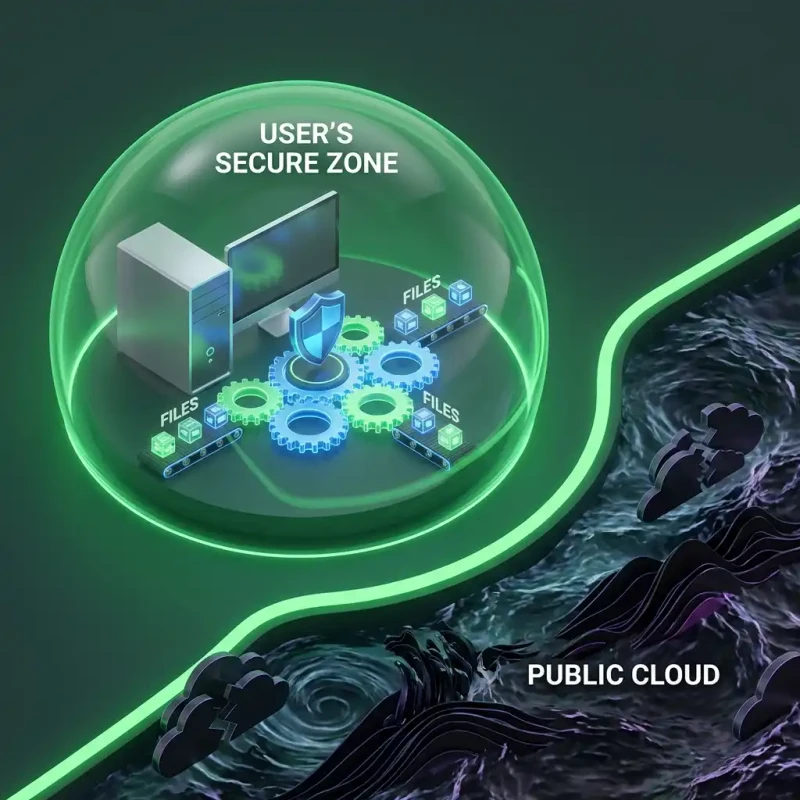
We have been conditioned by the last decade of tech to believe that "The Cloud" is the only way to do anything complex. If you want to edit a doc, use the cloud. If you want to compress an image, use the cloud. We became so comfortable with the convenience that we stopped asking about the trade-offs. At MojoDocs, we’re proposing a return to Data Sovereignty: the idea that your data should only leave your device when you choose to share it, not just because you needed a tool.
In this deep dive, we’ll explore the fundamental difference between processing in the cloud and processing in the tab. We’ll look at why the "Local-First" movement is reclaiming the browser as a secure workstation and why your sensitive files are better off never touching a remote server.
The Psychological Trap of the "Instant Upload"
Upload buttons are everywhere. They are so ubiquitous that we click them without thinking. But an upload is more than just a progress bar; it’s a transfer of custody. When you upload a file to a cloud tool, you are no longer the owner of its physical environment. You are a guest on someone else's server.
Cloud tools have a major conflict of interest. Their servers are expensive to run. To cover those costs, they need to monetize your presence. Whether it’s through "free forever" tiers that harvest your metadata or premium subscriptions that lock away basic features, your data is always part of the equation. MojoDocs breaks this trap by never asking for the data in the first place.
Why the Browser is the Ultimate Sanctuary
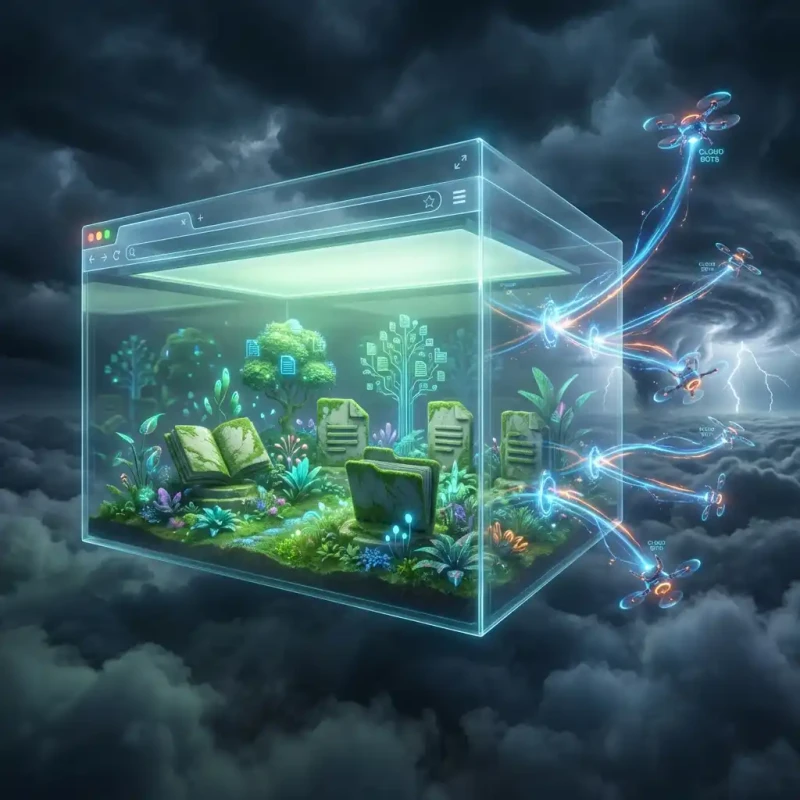
For years, the browser was seen as the "weak link" in security. But in 2026, the modern web browser (built on engines like Chromium or WebKit) is one of the most sophisticated security environments ever created. Through Sandboxing and WebAssembly, the browser allows us to run isolated, high-performance code that cannot see your system files or other tabs.
When you use MojoDocs, you are turning your browser into a temporary workstation. You drag a file in, our local engine processes it in your RAM, and you download the result. The moment you close that tab, every trace of that data is wiped. It is the most thorough "Self-Destruct" mechanism in the digital world. No cloud server can offer that level of absolute volatile storage.
The Metadata Problem in the Cloud
It’s not just the file content you should worry about; it’s the metadata. Every photo you take contains EXIF data: your GPS coordinates, the exact time, the camera model, and sometimes even your identity. Every PDF contains an author history and edit logs.
Cloud converters often scrape this metadata even if they promise to "delete the file." They use it to build search indexes or behavioral profiles. Because MojoDocs works locally, we don't have a technical path to scrape your metadata. What happens in the tab stays in the tab.
Comparison: The Privacy Hierarchy
| The Location | Traditional Cloud Apps | MojoDocs Sanctuary |
|---|---|---|
| File Storage | Remote Servers (Trust Required) | Local RAM (Physically Yours) |
| Processing Power | Shared Cloud CPU | Dedicated Local Hardware |
| Data Leak Risk | High (Database breaches) | Zero (No Database) |
| AI "Scraping" | Standard for free tools | Impossible by Design |
Reclaiming the "Edge" with WebAssembly
The "Local-First" movement is about moving the intelligence of the web to the edges—to you. By compiling heavy-duty C++ and Rust engines into WASM, MojoDocs achieves speed that often outperforms the cloud. Since your data doesn't have to travel to a server and wait in a queue, the "time-to-result" is drastically reduced. We are proving that decentralization is not just an ethical choice, but a performance choice.
The Moral Case for Local Tools
We built MojoDocs because we believe that software should be a tool, not a service. A tool (like a literal hammer) doesn't need to know who you are or what you're doing to work. It just provides the utility you need. By keeping your data in your browser, MojoDocs restores the original relationship between a person and their tools: one of total control and absolute privacy.
Conclusion: The Choice is Yours
The next time you need to process a file, remember: Privacy is a choice you make with every click. You can choose the old model of cloud dependence, or you can choose the new model of digital sovereignty. We invite you to try MojoDocs and see why the best place for your data is right where it is: with you.
Technical Insight: The 'Zero-Trust' Architecture
Interested in the code? Our application is served as a set of static files. Since we have no "Uploader" function in our API, even we cannot force your browser to send us your files. We have engineered ourselves out of the equation for your safety.