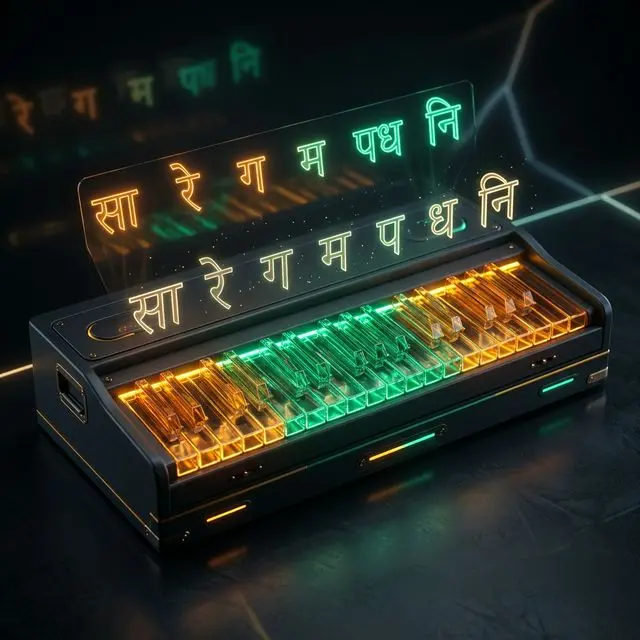
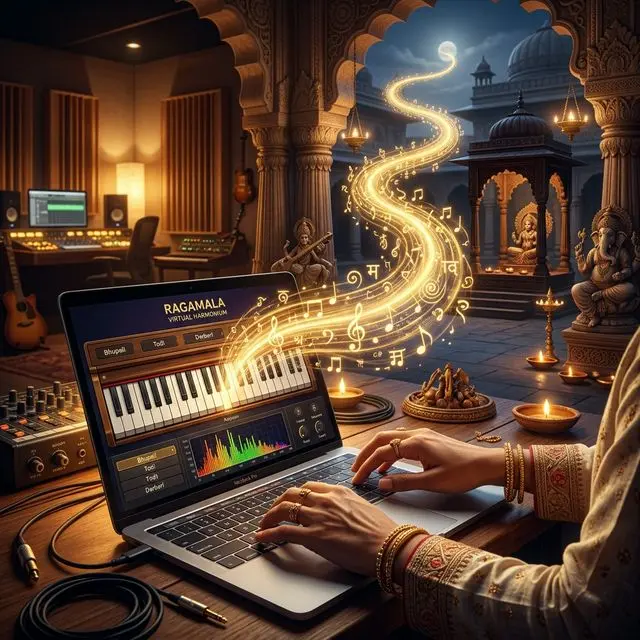
Want to learn Raags and Thaats but don't have a harmonium? Discover how the MojoDocs Web Harmonium Keyboard provides a professional, zero-latency environment to master Indian Classical Music from absolute scratch on your laptop.
Indian Classical Music (ICM) is an oral tradition passed down through centuries. Traditionally, it required three things: a Guru, a steady breath, and a physical harmonium. But as we move into 2026, the third requirement has changed. The Web Harmonium Keyboard is now a legitimate, high-performance tool for millions of students worldwide who want to learn Indian Classical Music online.
In this guide, we will transform your laptop into a professional Riyaz station. We will walk through the 10 Thaats of Hindustani music, the specific virtual harmonium notes for each, and how to use the MojoDocs engine to achieve perfection in your Alankars.
Section 1: The 10 Thaats (The Musical Foundation)
In Hindustani music, every Raag is born from one of the 10 Thaats (Parent Scales). Mastering these on a web harmonium keyboard is the fastest way to build your musical IQ. Because our tool uses a logical QWERTY-to-Swara mapping, navigating these scales is actually easier than on a physical instrument where you have to look down at your fingers.
| Thaat Name | Note Structure | QWERTY Sequence (C-Scale) |
|---|---|---|
| Bilawal (Normal) | All Shuddh (Natural) Notes | A -> S -> D -> F -> G -> H -> J -> K |
| Kalyan (Evening) | Tivra Ma (Sharp 4th) | A -> S -> D -> T -> G -> H -> J -> K |
| Bhairavi (Meditative) | Re, Ga, Dha, Ni (all Komal) | A -> W -> E -> F -> G -> Y -> U -> K |
Section 2: Mastering Alankars (Digital Muscle Memory)
Alankars are the "ornaments" or "patterns" of notes. To play them fast, you need a web harmonium keyboard with no lag. Most online tools have a 50ms delay, which means by the time you hear the first note, you've already pressed the third. This makes speed-training impossible.
The MojoDocs Web Harmonium uses WebAssembly to process the sound locally on your laptop's CPU. This brings the latency down to less than 2ms. You can practice "Palte" (ascending and descending patterns) as fast as you can type, building the neural pathways required for professional performance.
Section 3: The Importance of the 'Sa-Pa' Drone
In Indian music, the harmonium's main job is often to provide a Drone. Our tool includes a 'Drone Lock' feature. By locking the Sa (A) and Pa (G) keys, you create a static harmonic base. This is essential for learning Indian classical music online because it helps your ears tune to the root pitch, ensuring you never sing "Besur" (out of tune).
Section 4: Customizing Your Virtual Harmonium
Every singer has a different vocal range. A male singer might prefer Scale C# or D, while a female singer might prefer Scale G or A. On a real harmonium, you'd need a 'Scale Changer' model which costs thousands of dollars.
On the MojoDocs web harmonium keyboard, you can change your scale with a single click. Our Transpose feature shifts the entire QWERTY map, allowing you to use the same finger positions for a completely different pitch. This is the ultimate "Cheat Code" for professional vocal training.
Pro Tip: The Micro-Tuning Advantage
Sometimes, a Raag requires a "Sharper" Ma or a "Flatter" Ni. This is called 'Shruti.' Our advanced settings allow you to micro-tune individual virtual harmonium notes by single cents, giving you a level of tonal precision that even physical harmoniums struggle to match.
Conclusion: The Future of Global Riyaz
Whether you are in Mumbai, London, or New York, the Web Harmonium Keyboard makes Indian Classical Music accessible. You no longer need to carry a heavy instrument or worry about reeds going out of tune in humid weather. Your laptop is your harmonium; your browser is your stage.
Master Your First Raag Today
No installs. No ads. Just pure, zero-latency Hindustani music. Start your Alankar practice now.
Open Web Harmonium →