
Your files are being read by bots you never authorized. Discover how the 'Shadow AI' economy is harvesting the world's documents and how to stop it.
In 2026, the biggest threat to your privacy isn't a hacker—it's a 'Shadow AI.' Millions of users are still uploading their files to cloud SaaS platforms, unaware that their tax returns, legal briefs, and personal journals are being silently ingested by background bots to train the next generation of AI models. At MojoDocs, we call this the Great Document Harvest, and we've built the only effective escape route.
Behind every 'free' cloud tool is a hungry AI model. These models require trillions of tokens of data to stay competitive. In the race for AI dominance, your private documents have become the most valuable fuel on the planet. In this post, we'll expose the hidden mechanics of Shadow AI and show you how to reclaim your data from the bots.
The Rise of the Shadow AI Economy
For decades, the 'Shadow IT' problem was about unauthorized software. But 'Shadow AI' is deeper. It's about legitimate software performing unauthorized work. Many SaaS terms of service now include vague clauses like: 'We may use anonymized data to improve our services and research.' In 2026, 'improving services' almost always means 'training AI.'
Every time you upload a PDF to a traditional online editor, a background process (the Shadow AI) may be extracting the key themes, writing style, and metadata to feed into a massive database. You are effectively working for free for the world’s largest AI companies.
The 'Un-Train' Problem
Cloud providers will tell you: 'You can delete your file at any time.' But that’s a half-truth. While they might delete the original binary, they don't delete the learned weights. If an AI model has already read and learned from your document, that data is now part of its neural network. You cannot 'un-train' a bot. Once your data is in the cloud, it is permanently transformed into corporate intellectual property.
Local-First: The Only Way to Starve the Bots
MojoDocs solves the Shadow AI problem at the source: **We don't give the bots anything to eat.**
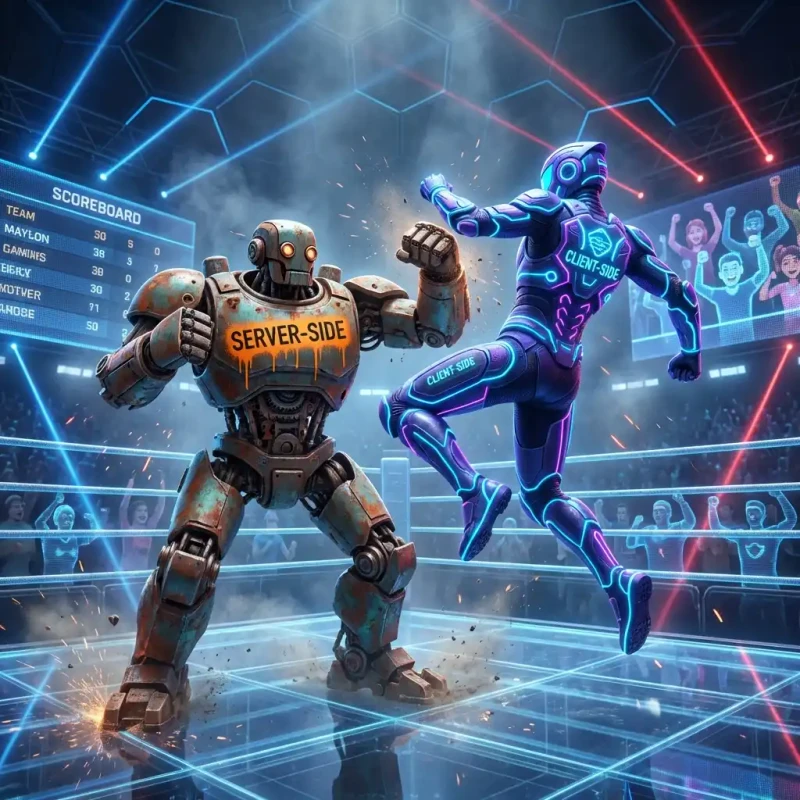
Because MojoDocs is Local-First, the code that processes your file runs entirely within your browser's private memory. There is no 'Shadow AI' waiting on our server because there is no file on our server. We prioritize your privacy not just as a feature, but as a technical necessity. By starving the bots, we restore your digital agency.
Comparison: The Risk of Ingestion
| The Threat | Traditional SaaS Converters | MojoDocs Engine |
|---|---|---|
| AI Ingestion | High (Automated Scraping) | Impossible (No Transit) |
| Data Retention | Server-Side Storage (Risky) | Volatile RAM (Wiped) |
| Transparency | Vague Terms of Service | Verifiable Client-Side Code |
| User Agency | You are the training data | You are the sovereign |
Protecting Your Professional Secrets
For professionals—lawyers, doctors, researchers—the Shadow AI risk is a professional liability. If your confidential case files are used to train an AI that later leaks information in a chat with a competitor, you are responsible.
MojoDocs is the only platform that provides **Structural Safety**. We don't just promise privacy; we engineer a environment where privacy is the only physical possibility. Using local-first tools is the only way to ensure that your 'eyes-only' documents stay that way.
Conclusion: Reclaim Your Work
The age of the 'Great Document Harvest' is here, but you don't have to be a victim. Stop feeding the Shadow AI bots and start using tools that respect your boundaries. MojoDocs is your shield against the ingestion machines of the cloud.
Engineering Insight: Starving the Ingestion APIs
Most SaaS converters are built with an API-first approach that makes it easy for background microservices to scrape and process data. MojoDocs is built with a **Client-First** approach. Our architecture is fundamentally incompatible with centralized data scraping because we never aggregate user files. We don't have a 'Data Lake' for bots to fish in.